
Versatile Bio Sensor Guide: Snore sensor
Understanding the snore sensor on the Versatile Bio
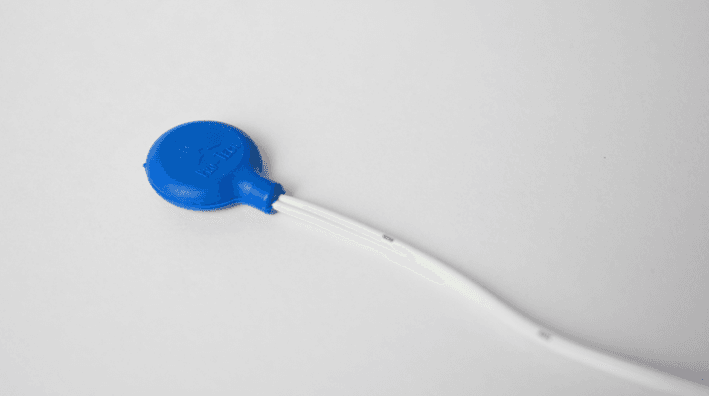
What it measures
The snore sensor captures acoustic vibrations generated in the throat, allowing the detection and analysis of snoring events during sleep studies.
Research Applications
Sleep studies, sleep disorder research, respiratory monitoring during sleep.
How to use
The sensor should be placed on the participant’s neck, close to the trachea, to ensure optimal detection of snoring-related vibrations.
How to clean
To clean and disinfect the sensor, do the following:
- Disconnect the sensor from the Versatile Bio.
- Use Clinell Universal Wipes (For more information, please refer to the following link: Cleaning and Storage Biosignal devices).
- Let it dry before using.
- Autoclave is not recommended, as steam sterilization can damage electronic components.
- Do not immerse the device in any liquid.
Connector on Versatile Bio
Visualization filters
To access the data visualization filters, right-click on the signal display in SennsLite or SennsLab.
Under "Notch-Filter" we recommend setting this to the preset matching your country's AC frequency (presets exist for USA/Japan at 60 Hz, and Europe at 50 Hz).
Under "Other Filter" click "enabled" Set filter type to "Bandpass" Set High (Hz) to 60 Hz Set Low (Hz) to 0.1 Hz Type is "Butterworth" Order set to 4
Output data
Output: µV Output Bandwidth: 0.16 Hz - 15 Hz
Output data is reported in microvolts and represents acoustic vibrations captured at the throat level. The signal allows the detection and analysis of snoring events, with amplitude varying depending on factors such as sensor placement and individual anatomy.