
Versatile Bio Sensor Guide: Electrodermal Activity Sensor (EDA / GSR)
Understanding the EDA / GSR sensor on the Versatile Bio
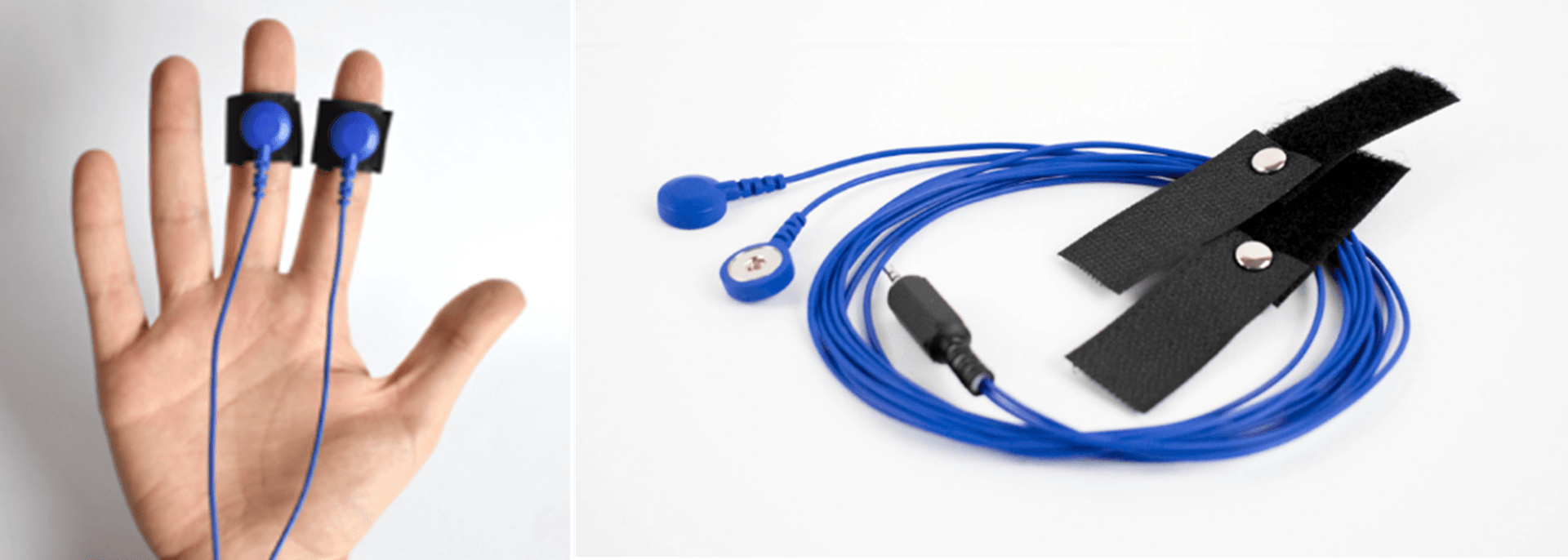
What it measures
The electrodermal activity (EDA) / galvanic skin response (GSR) sensor measures changes in the skin’s electrical conductance, which increases as sweat gland activity rises.
Research Applications
Psychology, neuroscience, human factors, user experience, market research, etc.
How to use
There are two sensors, each one is usually attached via Velcro strap to the middle and ring-fingers of the non-dominant hand. After the connection with the amplifier has to be made properly.
Resistance measured will change with different sensor locations, we recommend positioning the sensors in the same place on all participants within a study.
How to clean
To clean and disinfect the sensor, follow these steps:
- Disconnect the sensor from the Versatile Bio.
- Clean the sensor using Clinell Universal Wipes (for more information, see Cleaning and Storage – Biosignal Devices).
- Allow the sensor to dry completely before use.
- Do not autoclave the sensor, as steam sterilization can damage electronic components.
- Do not immerse the device or the sensor in any liquid.
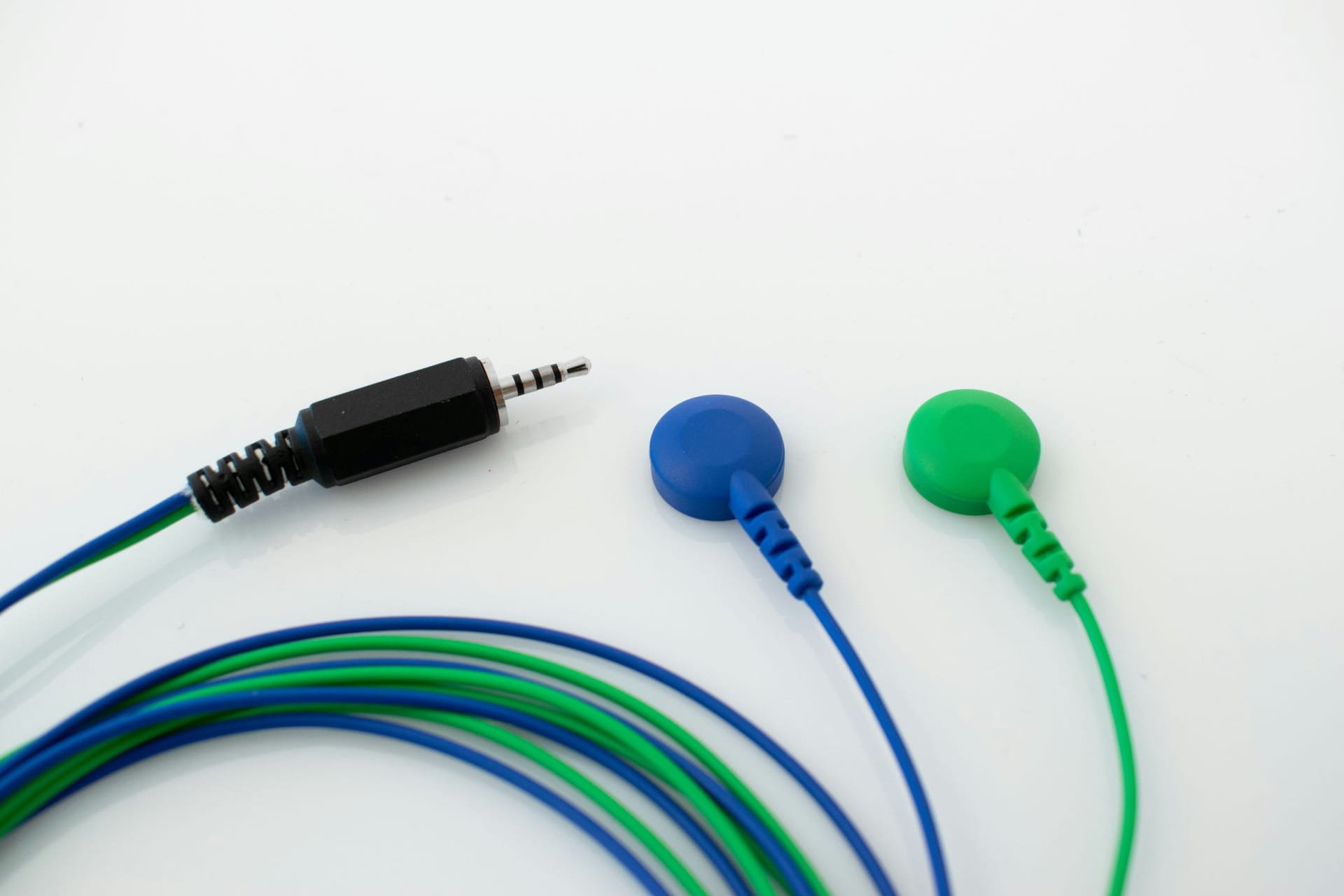
Connector on Versatile Bio
Visualization filters
To access the data visualization filters, right-click on the signal display in SennsLite or SennsLab.
Under "Notch-Filter" we recommend setting this to the preset matching your country's AC frequency (presets exist for USA/Japan at 60 Hz, and Europe at 50 Hz).
Under "Other Filter" click "enabled" Set filter type to "Bandpass" Set High (Hz) to 10 Set Low (Hz) to 0.2 Type is "Butterworth" Order set to 4
Output data
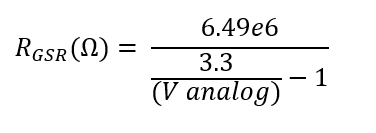
EDA sensor data is reported as analog voltage in µV. To use these values in the formula below, it is necessary to convert them to volts (V) beforehand, as the formula expects V analog in volts.
To calculate GSR resistance in ohms (RGSR), use the following formula, where V analog corresponds to the converted voltage value (in V) from the Versatile Bio analog channel where the EDA sensor is set up:
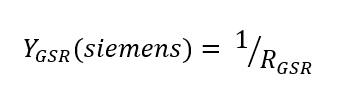
To calculate GSR admittance in siemens (YGSR), use the output from the previous formula in the following formula:
In MS excel, the conversion formula would look like this (analog V values in column A, enter formula between [ ] marks into B1 and C1):
A1 = Recorded (analog V) value B1 = [=6490000/((3.3/G3)-1)] C1 = [=1/B1]
B1 = GSR Resistance in ohms C1 = GSR admittance in siemens